
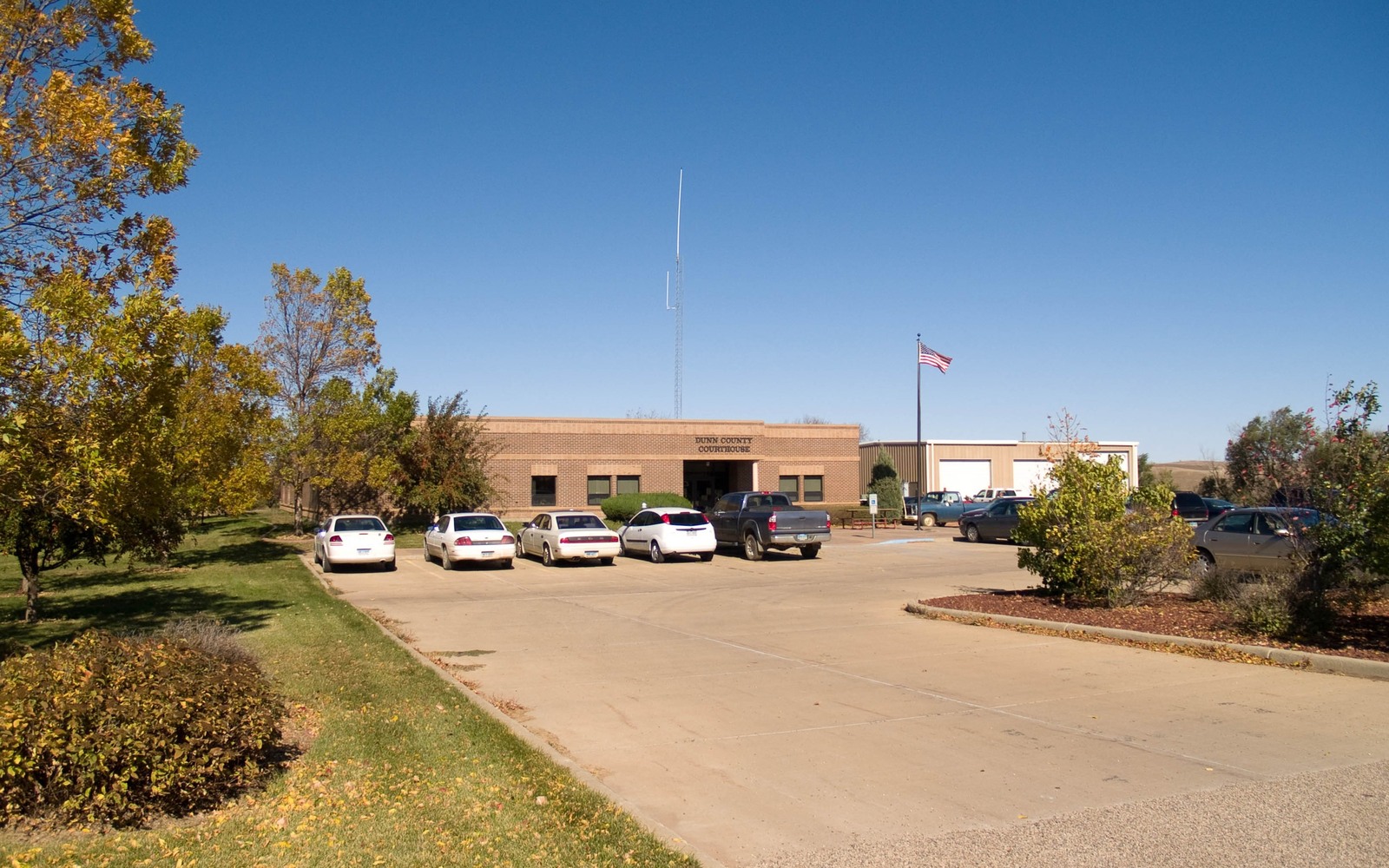
It's in Killdeer, the county seat, and it holds the deed history I need to confirm chain of title before making an offer on any Dunn County interest.
Sell Mineral Rights in Dunn County, ND
Dunn County doesn't carry the same name recognition as Williams or McKenzie County, but the Charlson field alone puts it among the counties where the modern horizontal Bakken play proved itself in the first place.
The Bakken acquisition desk reviews well, title, spacing, and payment records before preparing a written conclusion. Killdeer is the county seat, and the courthouse there holds a lot of the older mineral deeds we've had to track down for owners who inherited an interest and had no idea where the paperwork lived.
Dunn County sits inside what most people in the industry consider core Bakken, bordered by the Fort Berthold Reservation to the north and stretching south into rolling ranch country that's been drilled far more thoroughly than its rural feel might suggest. Communities like Killdeer, Dunn Center, Manning, Halliday, and Dodge all sit on or near sections with meaningful well history.
If you own minerals in Dunn County, whether producing or not, the value comes down to a handful of specific things we check before we ever quote a number, and we'd rather walk you through those than give you a generic range that doesn't hold up once we look at your actual tract.
Charlson Field and the County's Bakken History
Some of the earliest confirmation that horizontal drilling and multi-stage fracturing could open up the Bakken at scale happened in this county. That head start means a lot of Dunn County acreage has a longer production history than comparable ground in newer development areas, which is both an advantage and a complication. Advantage, because there's more data to price off of. Complication, because older wells were often drilled with shorter laterals and fewer frac stages than what's standard today, so their output doesn't always compare cleanly to a modern completion.
When we evaluate a Dunn County tract, we try to separate what's already been drilled with older technology from what could still be developed with a modern completion, since that gap represents real remaining upside on some sections.
Fort Berthold Boundary and Split Ownership
The northern part of Dunn County borders the Fort Berthold Reservation, and interests near that boundary sometimes involve tribal trust land, allotment history, or split ownership between tribal and non-tribal parties on the same spacing unit. We check this early in any conversation about acreage near the reservation edge, because trust-status interests move through federal approval channels rather than a standard county closing.
Away from the boundary, Dunn County minerals are typically straightforward fee ownership, and title work runs through the county recorder in Killdeer the same as anywhere else in the basin.
What Drives Price Section to Section
Not all of Dunn County performs the same. Sections closer to the reservation and along the main productive fairway have generally seen denser drilling, multiple wells targeting both the Middle Bakken and Three Forks, while some southern and eastern parts of the county see thinner development. We pull the specific township and range for your minerals before we quote, rather than relying on a county-wide average that would understate the good sections and overstate the weaker ones.
For producing interests, recent decline trend matters as much as historical peak production. A well eight years into a long, flat tail is a very different asset than one eighteen months past its initial peak, even if their current monthly volumes happen to look similar on paper.
Questions Bakken Owners Ask
Where is the Dunn County recorder's office and why does it matter?
Is Dunn County still considered core Bakken today?
Yes, particularly the areas near the reservation boundary and along the historical Charlson field trend, though development density varies by section across the county.
Your family's well was drilled in the early 2010s. Is it outdated?
Not outdated, but it was likely completed with shorter laterals and fewer frac stages than a modern well, which affects both its historical output and any remaining infill potential nearby.
How do you handle interests near the Fort Berthold boundary?
I first confirm whether the interest is fee minerals or tribal trust land, since trust interests require federal approval and move on a different timeline than a standard sale.
What's a reasonable timeline to sell Dunn County minerals?
For fee minerals with clean title, typically a few weeks from agreement to closing once I have your deed and, if applicable, current division order information.
Do you buy interests that include both mineral and surface ownership?
Yes, though I evaluate them separately. Surface ownership near a producing pad site sometimes comes with its own surface use agreement and damage compensation history that's worth reviewing alongside the mineral interest.
What happens if your Dunn County deed lists a different legal description than what shows in current well permits?
That's not unusual with older instruments, since section lines and platted descriptions were sometimes recorded loosely decades ago. I reconcile the legal description against the county plat and current survey records before closing, so there's no surprise later.
Keep Reading
More Bakken Guides for Owners
Bakken owner desk
Get a Straight Read on Your Bakken Interest
Share the county, owner name, interest type, producing status, recent statements if available, and the decision that needs a clearer answer.